Tuesday, 31 December 2013

The Future of the MBA

Otago MBA: photo taken at Allans Beach
Long exposure at Allans Beach, Otago peninsula

A recent article from The Financial Times, "The future of European MBAs," debated the role of technology in the delivery of MBA programmes and the future of the degree.  I encourage you to read the article and offer the following excerpts here.

Most professors think the disruption being caused by the availability of cheaper online education will actually raise standards at top-flight schools.
Simon Evenett, academic director of the MBA programme at the University of St Gallen in Switzerland, seems to speak for the majority when he says he can see a future dominated by the three Rs – retrenchment, relevance and rigour. He sees the three Rs as a process which will see some MBAs close while the top programmes become even better at what they do.
“A shake-out is coming which will force MBA programmes to focus on what they should be doing,” Prof Evenett says, there will be more concentration on the transformation an MBA is supposed to bring, as well as a response to demand from employers for an ability to work across cultures. “It will put an even greater premium on quality,” he says.
Peter O’Connor, dean of academic programmes at Essec, agrees that online MBAs will remain second tier: “For me, the value of an MBA is the value an employer places on the MBA. They are going to do their homework. Certainly, the feedback we have at this present moment is they don’t value online learning so much.”
Working against online learning is the emergent requirement for greater social competence, that many professors mentioned. "The blunt fact is that the world’s business schools do not prepare people to be fantastic colleagues, they prepare people to be fantastic analysts and that has to change,” says Stephan Chambers, MBA director at the University of Oxford’s Saïd Business School, adding that schools need to train people that you would want to work with.
Prof Chambers says the MBA of the future will have to respond to its future global context. He thinks MBA programmes will be supporting the movement towards greater corporate responsibility while at the same time preparing students to deal with what he calls “unparalleled global risks” including pandemics and food and water shortages.
“What we need are individuals who are capable of stitching all that together,” he says.The important skills of the future, will include decision-making in different cultures and linking science to industry.  “I think the world is desperately short of people who can handle that amount of complexity."

Every element of our Otago MBA is designed to provide personal attention
to you; to educate you as a whole person; to engage you in classroom experiences characterized
by rich dialogue and shared inquiry in pursuit of knowledge concerning the most
 compelling business problems facing global business leaders today.

David

Sunday, 29 December 2013

Our Mentored, Professional Consulting Engagement: Scary?

Otago MBA: The Catlins south of Dunedin
The Catlins, an excellent place to explore south of Dunedin.
One of the great things about NZ is the ease of access. With a population of just 4.4 million people, our Otago MBA team has access to many of the most senior business executives and government officials in the country. For instance, Lauren Rosborough, Senior Economic Adviser at the Reserve Bank of New Zealand, will meet with our 2014, MBA 38 students.  Try arranging that in the U.S.

Our BUSI 540 Consulting Project

Back to business, this post explains how our BUSI 540 consulting project works; why it isn't as scary as you may believe; and why this experience is better than placement. 

Okay, stretch your right hand out flat in front of you, at eye level: that's your client.  This client may be Z Energy, Downer, or ANZ Bank, some of the largest corporations in NZ; an adventure/sports related business Mons Royale, Icebreaker, Kathmandu, Siliconcoach or Real Journeys; an NGO like the Cancer Society of NZ or Mines Advisory Group; or a company located in another part of the world: BBC or Otto Group.  All of these companies have been past clients and we endeavor to place you on a stage with a high-profile client, with the chance to gain entry into the right industry, company and/or professional network.

Now, extend your left hand out flat in front of you, about 15 cm (6 in) lower than your right hand: that's you.  A level playing field does not exist between you and your client.  The client can make your head spin with the amount of immediate, context-specific information available. This can feel scary. Even so, clients are often confused, the reason why they need our help.

It's your job to bring the available information back and allow us to help you structure a credible BUSI 540 consulting engagement.  We (you & our team) abstract away from immediate data and irrelevant noise to say: "It's this kind of problem, requiring this kind of solution."  We frame the project within the relevant business discipline (e.g., marketing, finance, economics or sustainability) and design analyses that lead to substantive conclusions and recommendations.  Stated simply: we level the playing field and place you in a position to interact with the client as an equal, with an independent voice and something valuable to say.  


The BUSI 540 professional consulting engagement isn't so scary, 
with us in your back pocket.   


How is this better than placement?  Placement is passive, with you a less-than-active collaborator in managing your own career.  We don't leave you on the sidelines.  We offer you a platform (the 540) to demonstrate your worth to potential employers and earn a position.  Some students secure a position immediately; others parlay the experience to gain entry in the right industry; and still others leverage new contacts to secure a position.  You decide: would you rather be in a position to drive your own career or remain dependent on someone from placement for your career?

I am personally responsible for mentoring students through our BUSI 540, so I
invite you to apply and look forward to working with you.

David


Friday, 27 December 2013

Meet our Students: Krister Häll

Otago MBA, Otago University, Dunedin, New Zealand
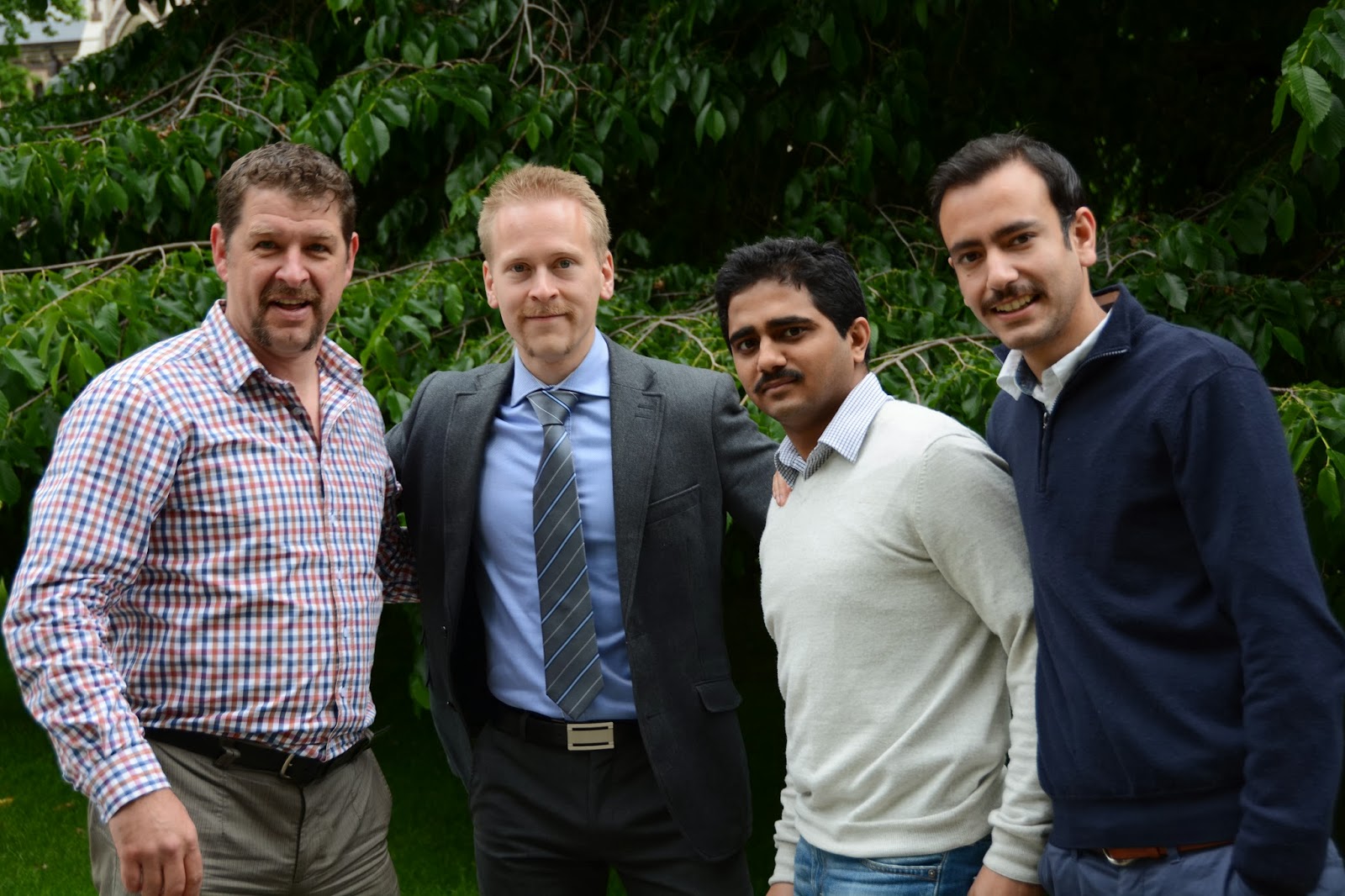
Ryf, Krister, Tapan and Ankit
Meet, Krister Häll, our friend from Finland and another member of the 2013, MBA 37 class.  Kris has been a terrific student this year, consistently upbeat, all-in for fun, and a gentleman in the truest sense of the word, with the ability to positively influence those around him.  He and his Live Case partners, for instance, chose to designate a shy/quiet syndicate member as their team leader, someone who lacked confidence and could best benefit from the experience.  He engineered a learning experience and then supported her in producing a successful outcome: their syndicate won the best case award.

Kris came to our programme with almost ten years of experience as an investment and risk analyst in the Finnish banking sector, including managing teams, analyzing risk positions and formulating hedging strategies.  He chose the Otago MBA to broaden his understanding of international business and deepen his grounding in economics and finance.  Kris performed well in our phase one core courses, demonstrating exceptional quantitative and leadership abilities: he was voted Top MBA of the Year by his peers. 

Kris will complete his Otago MBA degree through an international exchange at Duke University, to further specialize his education in finance and decision making, beginning in January.  He hopes to complete his BUSI 540 consulting project with a U.S. financial services company, either conducting research related to product/service development or process improvement.  We at the Otago MBA will continue to support Krister in his effort to pursue his career in either the European or U.S. financial services industry.

If you want to chart a similar path through life,
I invite you to apply.

David

Thursday, 26 December 2013

Global MBA: the Asian market

Otago MBA
Otago Harbour and Peninsula: from Signal Hill
According to the survey reported by MBA-Channel.com, there was a 14 per cent increase in MBA job opportunities in 2013. While this is a drop from the 15 per cent growth in 2012, it was still a very positive outcome.
Asia is the world’s most dynamic MBA market, with a 20 per cent growth rate that is mostly driven by China and India. Asia was followed by the Middle East (8 per cent), Latin America (6 per cent), and Central Europe (6 per cent). The market was much less active in North America and Europe, with 2 per cent and 1 per cent growth respectively, but growth across Europe is forecast to accelerate in 2014 as well as in Latin America that had a sustainable growth rate of 6 per cent in 2013, after a year of 14 per cent growth in 2012.
The research also showed that a higher percentage of MBA recruiters are recruiting pan-regionally or globally nowadays. Gone are the days, where employers only looked locally.

MBA career demand in 2013

The fastest-growing sectors are consulting (11 per cent), finance (11 per cent), general industry (11 per cent) and technology (11 per cent). The slowest-growing sectors are media/entertainment, travel/hospitality, metals/mining and pharmaceuticals/healthcare.

Compensation
According to the survey the top ten countries in terms of average MBA compensation in 2013 are Australia (US$133,100), Switzerland (US$129,700), Denmark (US$121,400), UK (US$106,100), France (US$100,800), US (US$98,300), Brazil (US$97,200), Germany (US$93,700), Spain (US$92,900) and Canada (US$91,600).


If you're looking to pursue an MBA in an English speaking country on the 
doorstep to Asia, I invite you to apply.

David


Our Classroom: the Power of Introverts


Everyone Contributes Valuable Insights!

In a prior post, I emphasized the importance of active learning and the collaborative discovery of
knowledge through shared inquiry in our classes.   Some of our students may remain reflective by nature; others may initially feel hesitant to speak in class; still others may face the challenge of thinking in one
language (e.g., Chinese) before translating thoughts into English; and differences in
culture may compel others to remain respectfully quiet.

I have included the "Power of Introverts" Ted Talk to embolden our more reflective students
and encourage more vocal students to remain culturally sensitive, respect everyone's
right to participate and strive for an inclusive learning experience.

Thank you,

David


Wednesday, 25 December 2013

Happy Holiday!

Merry Christmas from the Otago MBA team!

No work today: it's Christmas!  

The Uni's closed for a week and my mates from the Otago MBA team are off to Glasgow Scotland, Sydney Australia, Singapore, or other parts of New Zealand; and our students are home with their families all around the world.  Here it's summer, with temperatures in the mid-teens (about 60 f. for those in the Northern Hemisphere) and scattered showers, a pleasant day to enjoy my family.  I wish you a happy holiday season from our Otago MBA management team.

With kindness,

David

Tuesday, 24 December 2013

Back to our Business Model: conceptual reasoning

Ruins of an old farm
One of my favorite photographs owing to the lighting and
complementary colors: taken south of Dunedin
Time to get back to our business model.  I have explained: (1) we remain a boutique MBA programme (by choice) to deliver best value to our students and concede we remain beneath the radar of Top 100 rankings; (2) we are selective about whom we allow into our programme (less than 1 in 10) and resist compromising our standards for size; (3) our unique value proposition emphasizes accelerating your career in the global economy, both through facilitating a transformation in you as a business professional and using our project work to get you into the right industry, corporation and/or professional network; (4) we eschew placement in favor of rigorously training and supporting our students in pursuit of their career ambitions; and (5) our students practice their thinking skills daily in the classroom on the way to becoming truly powerful individuals who can express themselves with clarity and conviction.


All of the pieces of a business model must fit together to deliver best value.


Now, I'll elaborate on the notion of conceptual reasoning and how we develop this ability.  Our core courses (phase one, on-campus programme) focus either on building quantitative skills or thinking within credible business disciplines: e.g., content areas of economics, marketing or sustainability.  Content courses introduce concepts, but the precise definitions of these concepts vary from one course to the next: e.g., the definition of a market in economics vs. in marketing or performance in finance vs. sustainability.  Indeed, much of business revolves around a small number of concepts: market, customer, product (encompassing service), industry, competitor, competition, strategy, business model, performance, cost (plus cost structure), capital (including human capital), financial & physical assets, production/operations, transaction, organization form, ownership structure and so forth. 

Here's a critical insight: most business problems can be structured by identifying the concepts involved; the relevant business discipline needed to structure your thinking; and the appropriate analyses to support informed decision making.  It sounds simple but the challenge is to abstract away from the immediate details of a business situation (i.e., noise) to think conceptually, an acquired ability.

We emphasize conceptual thinking (or reasoning) as a theme across courses, thereby helping students to refine this ability as they progress through our programme, but I'll emphasize two critical experience that directly bear on challenging your reasoning.  First, our Strategic Planning course taught by our much loved Richard Higham, challenges your "dominant paradigm" or the concepts and definitions used to inform your thinking. Second, our high-level project work (e.g., Live Case & capstone consulting engagement) requires you to define the scope of work in terms of key concepts.  As stated in our BUSI 540 course outline:  
"Any 540 project we conduct focuses on business concepts.  Some concepts delimit the project scope (this product or those competitors), while other concepts are defined by your analyses.  Indeed, an entire 50-page report may focus on defining one concept (e.g., what is the market?).  In this regard, you advance knowledge (make an intellectual contribution) by defining / describing some core business concepts more precisely than anyone has before—and you inform your definition (of the market) with data." 
When you're ready to get started, let us know.

David

Monday, 23 December 2013

Adventure Capital of the World

    Sometimes, no explanation is necessary: just watch!


                                 Queenstown: Adventure capital of the world - Videos - CBS News
  1. www.cbsnews.com/.../queenstown-adventure-capital-of-the-World, Mar 5, 2013


Let's face it, all work and no play is no fun:
Apply now

David


Meet Our Students: Ryf Quail

Ryf Quail
Otago MBA 37 Student, Ryf Quail
The stated purpose for his blog, as it pertains to future Otago MBA students, is to introduce you to Dunedin and provide a look inside our programme.  This includes allowing you to meet my friends and colleagues: meet Ryf Quail, one of our 2013, MBA 37 students.

Ryf is an Aussie who grew up throwing rocks at snakes and quickly riding away as the snakes gave chase. He proudly boasts that he can trace his ancestry back to criminals on both his mother's and dad's side.  Ryf arrived in Dunedin last April along with is wife, Nichola, a talented business professional, and three-year-old daughter, Izzie, who wraps dad around her little finger.  Ryf describes himself first as a surfer and then as a seasoned media and marketing professional.

Ryf was easily the most impactful student in this year's class, with the most uninhibited approach to life: he laughed loud and often; perpetually supported the wrong sports teams; fueled Aussie vs. Kiwi rivalries; and rode a wave of adrenaline through our programme.  No one was left unscathed and we'll all remember Ryf as a great friend.

He will complete an international exchange at Grenoble Ecole de Management before undertaking a BUSI 540 project aimed at launching a high tech, Internet business venture (no details).  This is something I know about: Ryf and I argued for three months about the wisdom, and credibility of this venture.  He championed from a base of experience in Internet technologies and client needs, while I challenged from neuroscience and the risk that technological innovation could doom the venture.  He eventually won me over through his sheer stubborn commitment. 

Little doubt exists: Ryf will become a successful (and wealthy) entrepreneur, maybe by launching and selling this venture before moving on to the next.  To Ryf, an Otago MBA forever!


We are constantly on the lookout for MBA candidates of the
 caliber of Ryf Quail.  I invite you to apply to our programme if you dream big and
 have the guts to follow those dreams.

David


Wednesday, 18 December 2013

The Classroom: a focus on thinking


Governors Cafe, George St., Dunedin, NZ
Dunedin is a city of small cafes, cozy restaurants and friends
well-suited for good conversation.
I've been a professional educator for more than twenty-five years and this topic, the classroom experience, is one about which I am passionate. You would think that, over twenty-five years, pedagogies would change and we (as educators) would become more effective in facilitating learning. Yet, too often teachers, a term very loosely defined, continue to lecture at students who passively take notes under the premise that this person is providing right answers (i.e., pearls of wisdom) concerning whatever problem businesses may face: the idea is pure nonsense.

Not at the Otago MBA!

Remember, "right" answers do not exist in MBA-level discussions and everyone
in the classroom should actively engage in the discovery of knowledge.


The Otago MBA management team subscribes to an active learning model in which students participate in the learning process and daily practice their thinking skills, while demonstrating the ability to apply course material (e.g., from marketing, finance, economics) to complex business problems. In other words, we encourage shared inquiry as the path to becoming a self-reliant thinker, someone who can express him or herself with clarity and conviction; who can think conceptually (e.g., identify and define key terms); as well as contribute to the collaborative discovery of a deeper understanding of fundamental questions facing global businesses.

Our students are asked to adhere to essential guidelines for engaging in productive discourse in our small seminar-style classes:
  • Resist overly quick judgments
  • Avoid arguing from small-N experience (e.g., we did it this way) and opinion
  • Support your reasoning using credible references (e.g., course materials)
  • Relate comments to the ongoing discussion
  • Strive for dialogue rather than a monologue
  • Seek to include all others in the conversation
  • Do not direct all discussions through the lecturer
  • Consider questions as a good way to enter the conversation
  • Avoid dominating with comments that are too lengthy or of little interest to others
  • Use courtesy and civility in all communications
  • Feel encouraged to continue lively debates outside the classroom

I will have much more to say about the importance of building powerful thinking
 skills in future posts: we consider this as fundamental to the transformation our students
 experience in our programme.


As always, I invite you to apply now.

David